Alaska‘s capital had nearly 70% fewer winter-temperature days between 1998-2025 compared to 1970-1997; Anchorage ranked second at 54%
By Mark Sabbatini, Juneau Independent
Juneau’s winters are growing shorter — by far — compared to 244 other U.S. cities, according to a new study published this month. It states Juneau has 62 fewer days of cold-season weather annually, a nearly 70% reduction compared to a few decades ago.
Anchorage ranked second in the study with 49 fewer winter days each year. Among the 195 cities in the study with fewer winter days, the average was nine days. About 15% of cities — particularly in coastal California and the Ohio Valley — had more winter days.
The results for Juneau and Alaska are “consistent with exceptionally rapid warming in Alaska and other high-latitude locations,” according to the study published by Climate Central, a climate research group.
The study compared temperatures between 1970-1997 and 1998-2025, analyzing the coldest 90-day period during each year.
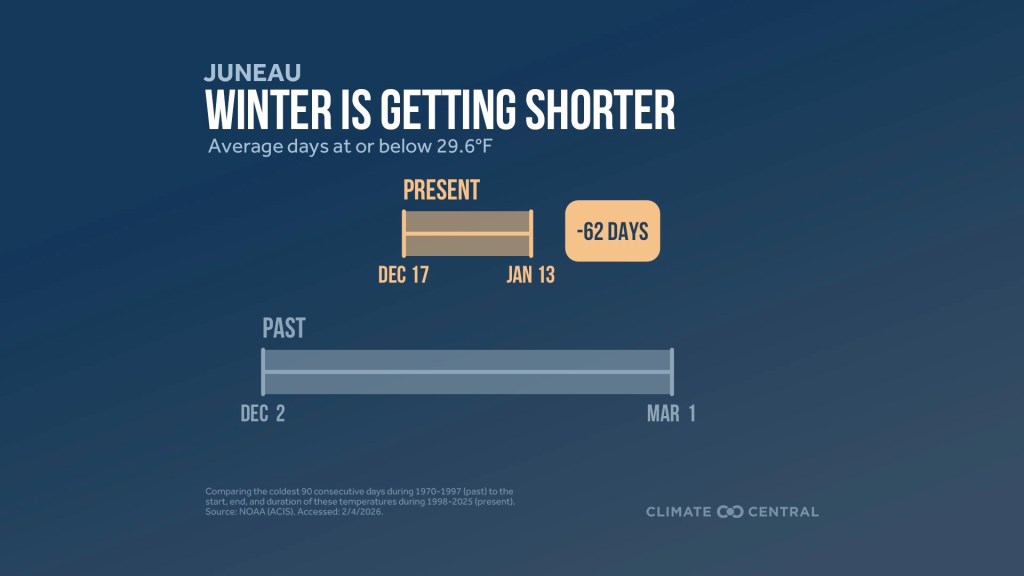
A chart shows Juneau’s winters during the past 28 years are far shorter than during the previous 28-year period. (Climate Central)
Juneau’s “winter threshold” in the study was 29.6 degrees, representing the average temperature during a 90-day period between Dec. 2 and March 1 during the 1970-1997 study period. That 29.6-degree average only lasted 28 days in Juneau during the 1998-2025 study period.
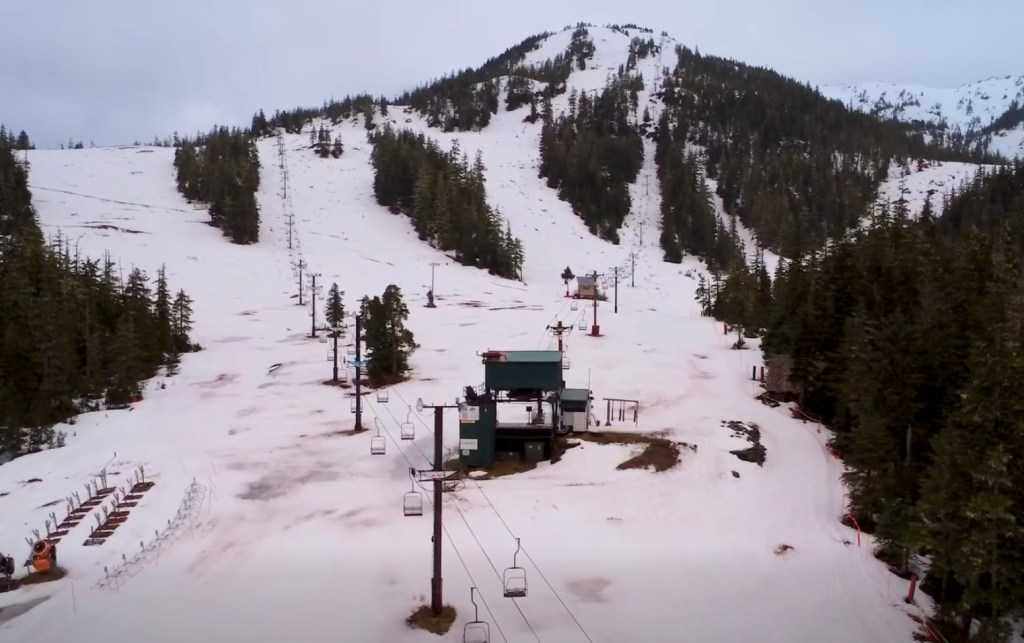
Climate change has been cited as a cause of numerous significant issues in Juneau, most notably increasingly severe glacial lake outburst floods that have reached record levels the past three years and are expected to continue to worsen. Local officials also say it is the cause of shorter ski seasons at Eaglecrest Ski Area, which is among the reasons efforts are being made to establish large-scale year-round tourism on the mountain.
Reports issued by the Alaska Center for Climate Assessment and Policy at the University of Alaska Fairbanks also cite other impacts such as increasing landslides and hazards to wildlife such as increasingly acidic seas. But the center also notes the actual rate of change is much faster to the north — a 2024 study reports the average temperature in most of Southeast Alaska increased 2.2 degrees Fahrenheit between 1974 and 2023, while the northern region increased 6.1°F.
President Donald Trump has frequently referred to climate change as a hoax and taken numerous actions repealing policies intended to limit impacts. Earlier this month he announced he was erasing the scientific finding that climate change endangers human health and the environment, ending the federal government’s legal authority to control the pollution that is dangerously heating the planet.
This article originally appeared in the Juneau Independent, February 25, 2026
 WHALESONG
Leave a comment